Community leaders from across Aotearoa gathered at the E Tū Whānau Kahukura Workshop 2026 to share experiences, reflect on their mahi and explore new ways of supporting whānau safety and wellbeing.
Delivered by E Tū Whānau community partner Ōrongomai Marae over two days in Upper Hutt in early July, the workshop brought together representatives from 46 community organisations committed to creating positive change within their whānau, hapū and communities.
The event also included the E Tū Whānau Ann Dysart Kahukura Awards 2026, which recognised outstanding community leadership.
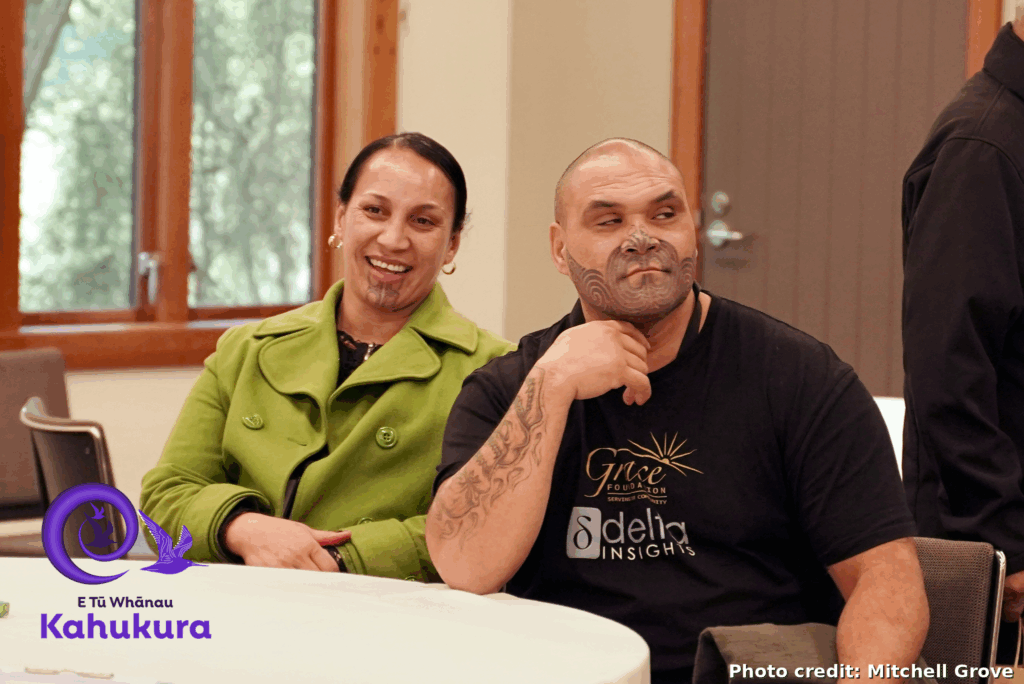
For many participants, one of the greatest benefits of the workshop was the opportunity to reconnect kanohi ki te kanohi with others committed to strengthening whānau wellbeing and community-led change across Aotearoa.
“Tikanga – loved being able to connect to others’ views and see how similarly we work.”
Workshop participant.
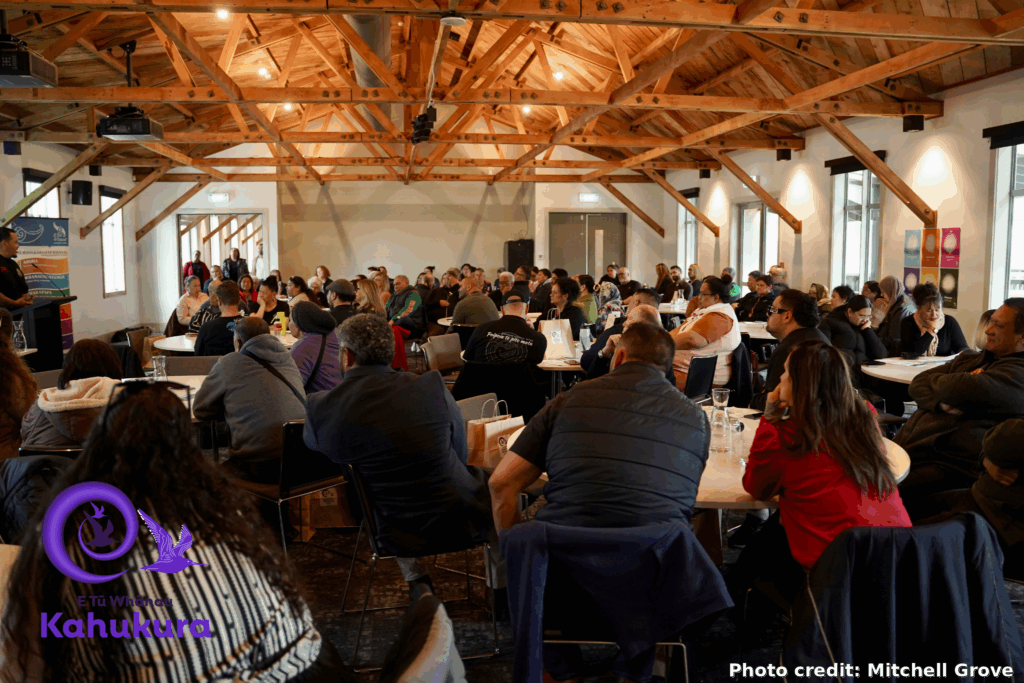
Reconnecting through the Kahukura Workshop 2026
Opening the workshop, E Tū Whānau Kaiwhakahaere Heni Turner welcomed community leaders from around the motu and acknowledged the pressures many whānau and communities are facing.
She encouraged participants to use the two days to reflect on their mahi, explore new opportunities and consider how communities can continue supporting whānau aspirations into the future.
“For many of the whānau we work alongside, things have never been so tough,” Heni said, “so taking time out to reflect, kōrero and replenish our cups feels both timely and necessary.”
Drawing on findings from a recent evaluation of E Tū Whānau, Heni highlighted the importance of community-led action and solutions and the powerful role kahukura play in inspiring change within their own communities.
“The E Tū Whānau Evaluation 2025 and measurement tools help to validate our Māori ways of working with our own people in our own communities.”
Heni Turner, E Tū Whānau Kaiwhakahaere
Exploring what works for whānau and communities
Throughout the workshop, participants explored practical approaches to strengthening whānau and community wellbeing. Discussions focused on sustaining community-led kaupapa, building local leadership, supporting rangatahi development and creating lasting change through collective action.
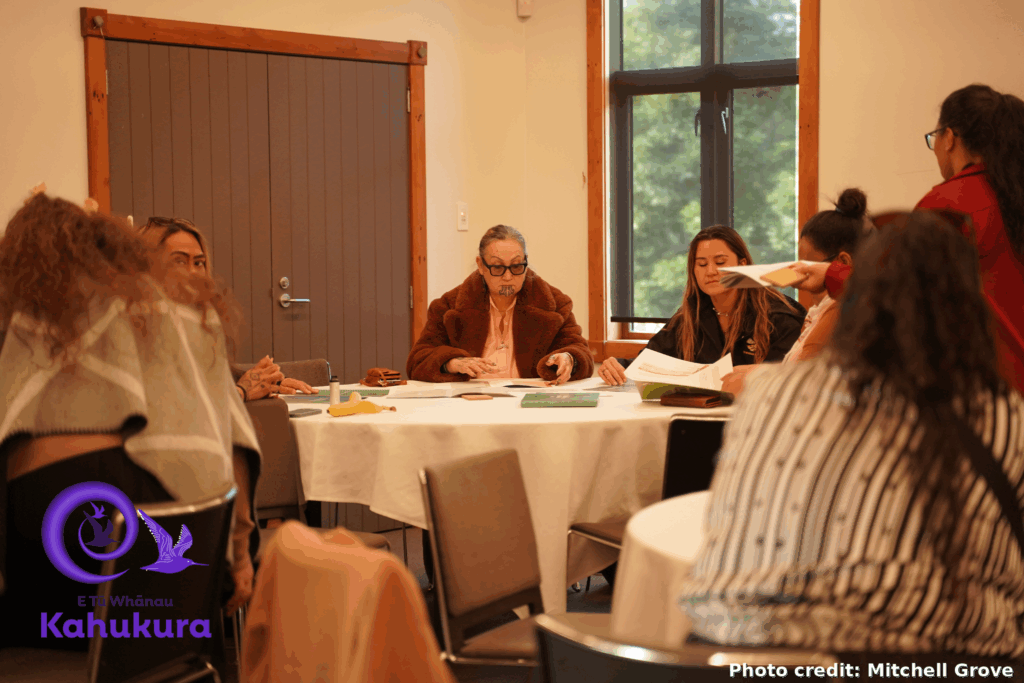
In small groups, participants shared successes, challenges and practical solutions that are making a difference for whānau, hapū and communities across the motu.
One participant reflected that the workshop reinforced the importance of “not working in a silo; I know I’m not alone”, while another said they felt “impassioned to do more, to extend” after hearing the experiences and ideas shared throughout the workshop.
Evaluation confirms the strength of community-led change
E Tū Whānau Team Leader Keelan Ransfield shared findings from the recently completed E Tū Whānau Evaluation 2025, which examined how positive change happens within whānau and communities and what makes the E Tū Whānau kaupapa effective.
“We wanted to understand how change actually happens for whānau – not just what we do, but what makes the difference.”
Keelan Ransfield, E Tū Whānau Team Leader
The Evaluation found that E Tū Whānau is creating sustained improvements in wellbeing and safety, while strengthening leadership, resilience and healing within whānau and communities. It confirmed that community-led action, values-based approaches, local leadership and safe collective spaces are key drivers of positive change.
Using the whakataukī Kia uru kahikatea, te tū – To stand as a grove of kahikatea, the Evaluation describes E Tū Whānau as a collective whose strength comes from interconnected relationships, leadership and shared action.
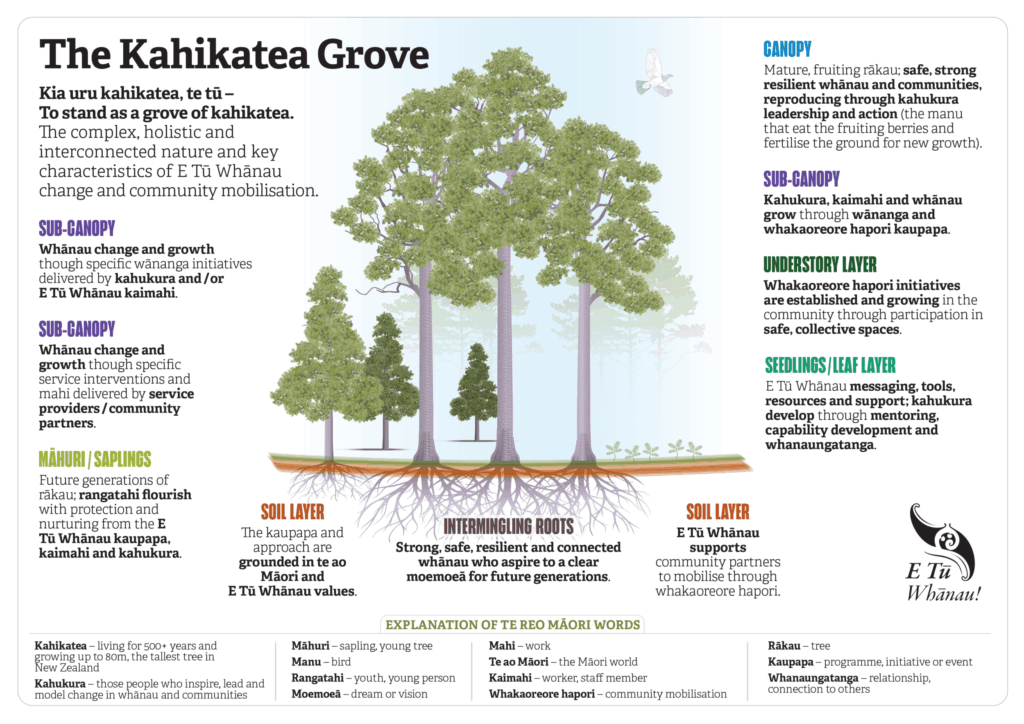
The Evaluation also highlighted the importance of connection to culture, identity and whakapapa as a key driver of lasting and intergenerational change. It found that wānanga, community mobilisation and collective, safe spaces where people can connect, heal, learn and grow are among the strongest contributors to whānau wellbeing.
Kaupapa Māori tools supporting whānau and community growth
Alongside the Evaluation findings, participants were introduced to two new kaupapa Māori tools developed to better understand and measure change at both whānau and community levels.
Researchers Dr Cristy Trewartha and Dr Finley Ngarangi Johnson (Rongomaiwahine, Ngāti Kahungunu) shared the story behind the development of Te Whakaoreore Aromatawai Hāpai ki te Hapori and Te Pikitia a te Whānau. Developed over several years with community partners, researchers and subject-matter experts, the tools provide culturally grounded ways to assess whānau wellbeing, community mobilisation and progress over time.
Community partners also had an opportunity to explore the tools in small rōpū, using a poutama framework that maps growth from te kore and te pō towards the aspirational destination of te ao mārama.
Participants quickly recognised the practical value of the tools for understanding whānau wellbeing, supporting planning and demonstrating impact over time.
Looking ahead together
Feedback from participants suggested the workshop achieved exactly what it set out to do: create space for reflection, learning and the exchange of ideas.
One participant said they planned to “strengthen further our connections with our extensive E Tū Whānau community and network”, while another said they would “continue to network and share mātauranga”.
As Kahukura Workshop 2026 came to a close, participants left with new insights, practical tools and renewed confidence in the strength of community-led action to support whānau wellbeing.