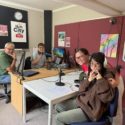
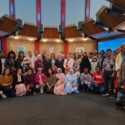
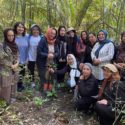
For the last 10 years a tight group of wāhine from the Lower Hutt suburb of Pōmare have been changing lives and minds, including their own, by quietly educating themselves, starting careers and strengthening their community.
They credit E Tū Whānau, a kaupapa that echoes their belief in the strength and power of whānau, with broadening their horizons.
Since their involvement with E Tū Whānau the wāhine of Pōmare report fewer incidents of whānau violence. Their work with NZ P-Pull and the meth support walk-ins has slashed drug use in their hapori. Interactions between their community, the Police and Oranga Tamariki have also dropped markedly, as have disciplinary issues between their rangatahi and their schools.
The Pōmare wāhine put it down to positive peer pressure and a greater openness towards people from all walks of life.
Strong foundations and a deep commitment to community
Jaz Tamaka is one of 12 siblings. They were bought up in a safe, loving home under the guidance and protection of their father, a highly influential tane in a community that they know some outside the group view with suspicion. Tai Pairama has been an active advocate for violence free whānau for nearly two decades and his children and mokopuna are immensely proud of him. Their mother and a ‘very Christian’ Nana were there for them too.
Whanaunga and friends live alongside them in Pōmare. Some moved away in 2011 when a new housing initiative replaced their homes with a mix of state, social, and private housing that changed the social makeup of the community.
The Tamaka whānau and other community advocates fought hard to retain their presence in the area and get services they so badly needed. They helped establish the Pōmare Taita Community House that works closely with the medical centre that sits alongside it.
These days Jaz is Team Lead at the Pōmare Taita Community House, working with locals as well as migrants and former refugees who face different challenges.
“We fought hard for that community house and now we’re the ones looking after it for all the other people around us. That’s been good for all of us,” says Jaz.
Opening eyes and minds
Their protective early life undoubtedly helped them navigate life’s challenges and appreciate the difference between their upbringing and that of some of their cousins and friends. But it was E Tū Whānau, they say, that opened their eyes and minds to opportunities, and to other communities around them.
“Our attitude was definitely ‘we’re the best, stuff the rest’,” says Jaz , laughing at her earlier self.
Ten years ago Jaz, two of her sisters and a cousin were studying for a social work degree.
“It was doing my head in. It was like we were being taught to just fit into the system’.”
The late Ann Dysart, who was the E Tū Whānau kaiwhakahaere at the time, suggested they attend a series of weekend Mauri Ora wānanga facilitated by the long-established indigenous education and training organisation, Te Korowai Aroha o Aotearoa.
It was a game changer.
“Talking about whakapapa, our stories and the tikanga practices of the old people made us realise that even though we hadn’t been bought up in te ao Māori we already had a lot of this knowledge. It took the Mauri Ora kaupapa within Te Korowai Aroha o Aotearoa to get it out of us. Once we’d started, we wanted to know more.”
The other course participants were practitioners from local Māori social services organisations.
“It’s amazing to sit with a big group of people who are really interested in you, who want to know what you know, and who want to share what they know with you.”
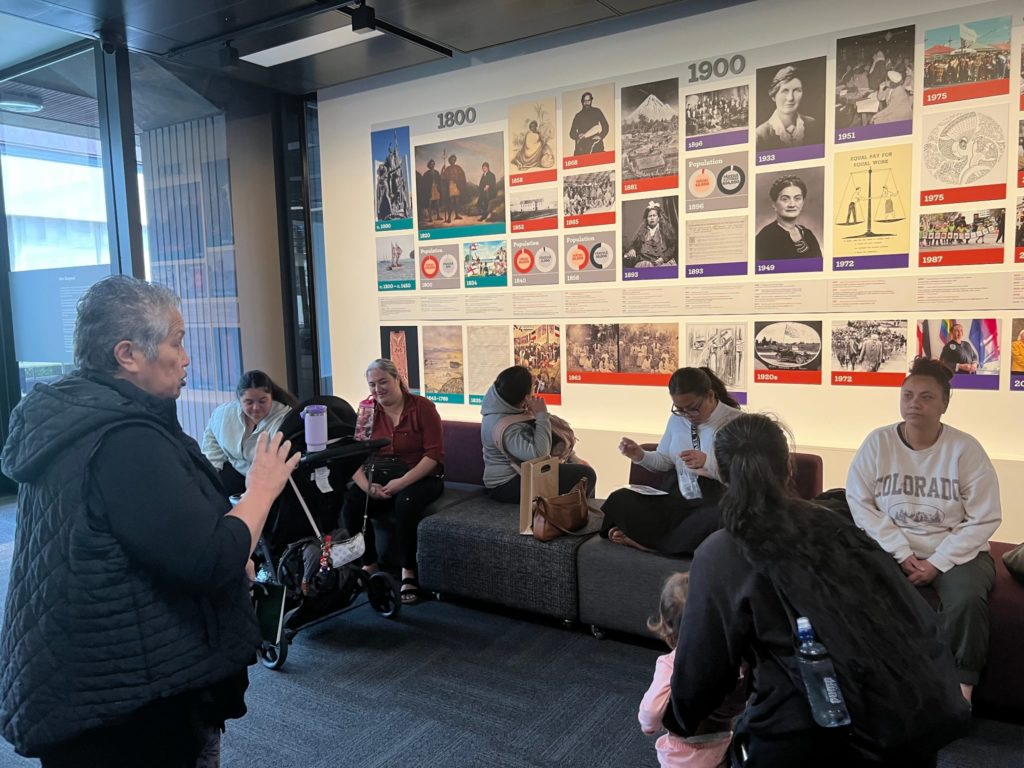
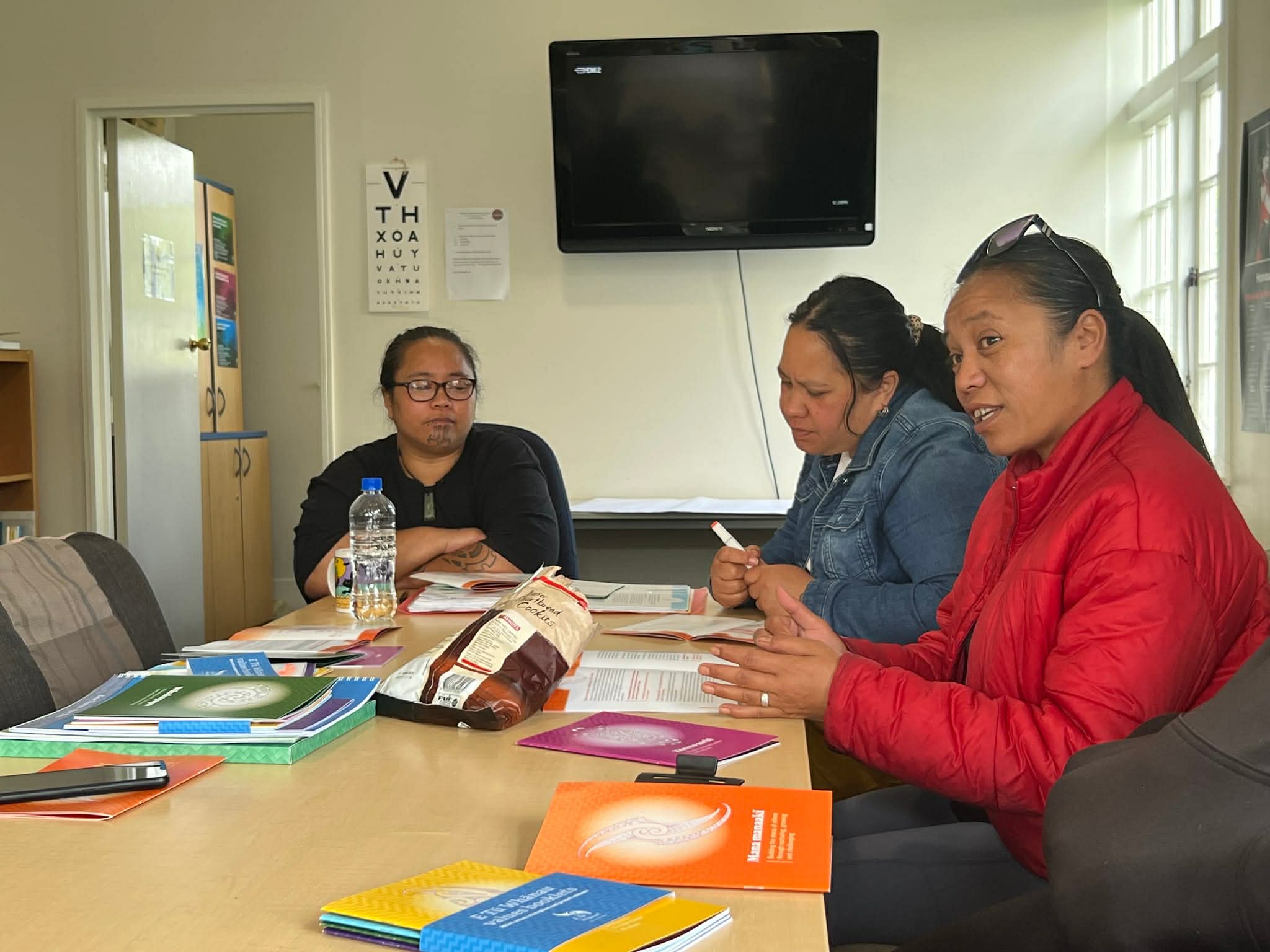
Moerangi Falaoa-Raupaki (former E Tū Whānau kaimahi) runs a wānanga with Pōmare wāhine
A year later, Jaz and a large group of whānau from their community attended an E Tū Whānau supported wānanga at Ōrongomai Marae. They were introduced to more Māori history and tikanga from local kaumātua and eminent scholars like the late Moana Jackson.
One sister told E Tū Whānau that before the Ōrongomai hui no one spoke te reo or said, ‘Proud to be Māori’.
“It wasn’t a thing. But that all changed as we learnt more and got deeper and deeper into E Tū Whānau and matauranga Māori.”
Learning, growing and forging ahead with life
A decade later many of these wāhine are studying or working in both paid and voluntary jobs. These include kaiwhakaruruhau ā iwi practitioners, public servants, community support workers, addiction practitioners, and road workers. And one wāhine, a caregiver, is well on the way to gaining a level 3 health and wellbeing qualification.
Then there’s Desiree Anderson who gained confidence and personal insight while studying for a degree.
“Knowledge,” says Desiree, “is power but it’s also a concept, a mix of facts, values and beliefs.
“That’s why every time I sit down to study I put my dad’s photo up in the front of me. He’s my inspiration, my kaitiaki. I take him everywhere with me.”
While studying Desiree discovered a passion for waka ama and the healthy lifestyle that comes with it.
“Waka ama enlightens and guides me, not just on the water but in my life. When I’m out in that beautiful place it’s just me and Tangaroa so I have to trust myself,” she says.
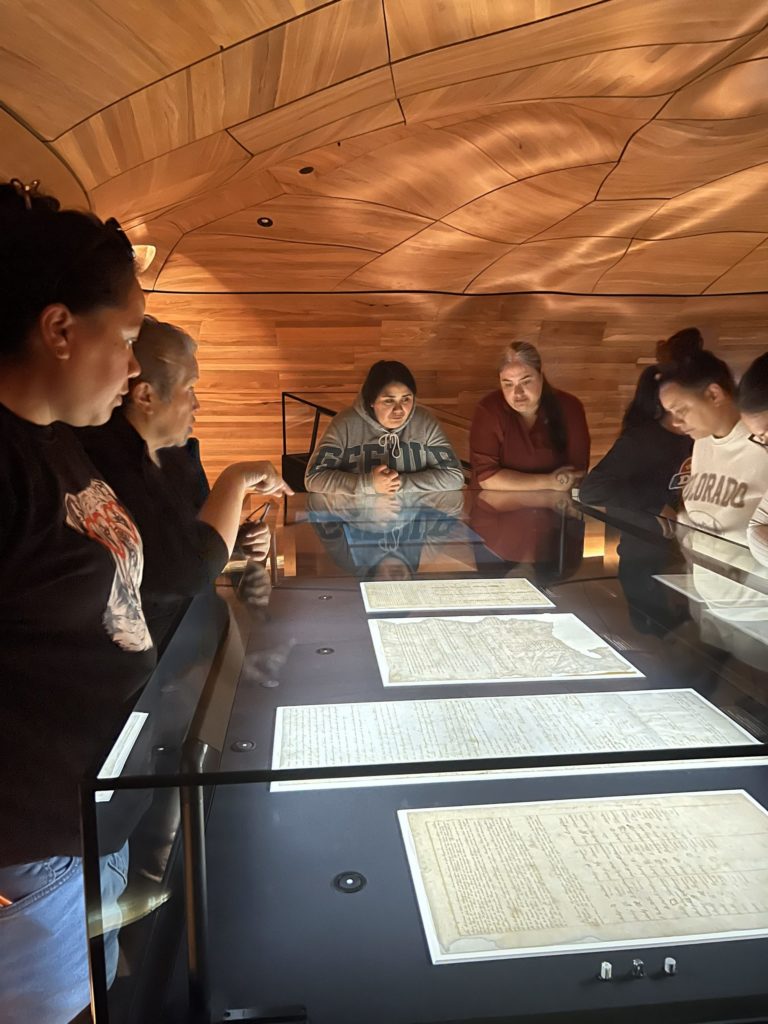
Recently a larger group of Pōmare wāhine competed a series of Mareikura wānanga using E Tū Whānau resources to explore concepts like aroha, kōrero awhi and mana manaaki in increasingly deeper and more meaningful ways. They looked beyond their community, consciously building knowledge and connections to te Ao Māori and significant local history and events. Jaz emphasised the value of these experiences and the power that lies in knowledge, especially understanding how the past affects their everyday lives today but also how it can shape a bright future.
“It feels powerful to know there’s a whole world out there for me to grab for myself, my tamariki, my moko and our whole whānau, a world where we can trust in ourselves and be safe.
Because once you learn to trust in yourself, I believe you can do anything.”